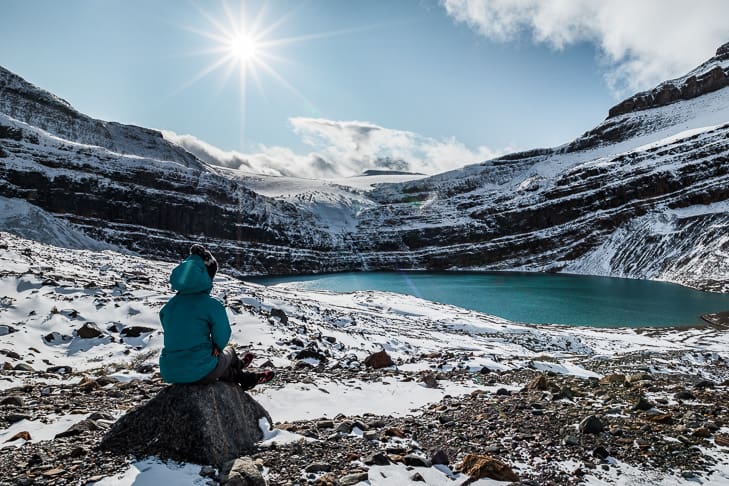
Nestled within the breathtaking expanse of Banff National Park, the journey to Bow Glacier Falls is an iconic Canadian Rockies experience that promises unparalleled natural beauty. This renowned hike, often combined with the more challenging ascent to the elusive Iceberg Lake, offers adventurers a spectacular blend of glacial landscapes, vibrant turquoise waters, and powerful waterfalls. If you're seeking a quintessential Banff hiking adventure, discovering Bow Glacier Falls and the option of extending your trek to Iceberg Lake should undoubtedly be at the top of your list.
Embarking on the Journey: The Bow Lake Shoreline
The adventure to Bow Glacier Falls begins from one of Banff National Park's most picturesque locations: Bow Lake. Situated along the world-famous Icefields Parkway, roughly an hour's drive north of Banff town, Bow Lake is a stunning glacial lake that captivates visitors with its vibrant blue-green hues and dramatic mountain backdrop.
Starting Point: Num-Ti-Jah Lodge
Your expedition commences at the historic Num-Ti-Jah Lodge, a charming stone and timber structure built by legendary outfitter Jimmy Simpson. This lodge, visible from the Icefields Parkway, provides not only a convenient parking area but also a sense of history before you even hit the trail. From here, the well-marked path guides you along the western shore of Bow Lake, offering immediate access to incredible views that set the tone for the entire hike.
A Walk Along Bow Lake
The initial segment of the trail is relatively flat and easy, making it an excellent family-friendly stroll. As you traverse the shoreline, you'll be treated to panoramic vistas of the surrounding peaks, including Mount Jimmy Simpson and the iconic Crowfoot Mountain, which often sports a "crow's foot" shape in its snowfields. The ever-changing colours of Bow Lake, shifting from deep sapphire to milky aquamarine depending on the light and glacial silt, are a constant source of wonder. Even on days when the high peaks might be shrouded in cloud, the beauty of the lake and its immediate surroundings remains undiminished. This section of the hike is particularly popular, so be prepared for crowds during peak season and midday hours, especially on sunny days when the mountains and glaciers are fully visible.
The Path to Power: Reaching Bow Glacier Falls
Leaving the immediate shoreline behind, the trail gradually transforms, leading you deeper into the glacial landscape. This section offers a diverse hiking experience, moving from open forests to intriguing geological formations.
Crossing Glacial Moraines and Creeks
As you progress, the path navigates through areas shaped by ancient glaciers, including old moraines and boulder fields. These natural features serve as a testament to the powerful forces that sculpted this valley over millennia. You'll follow the course of the Bow River, a pristine glacial creek fed directly by the falls. The creek's water is a striking, milky turquoise, a characteristic "glacial blue" caused by finely ground rock flour suspended in the water. This captivating colour makes for fantastic photo opportunities and is a constant companion on your journey toward the falls.
The trail will wind its way up, occasionally requiring careful footing, especially if recent weather has left areas slick or icy. Hikers might encounter a natural bridge formation over the creek, which, depending on conditions, can present a minor scramble. The reference context highlighted that even a thin layer of ice can make such sections challenging, emphasizing the need for appropriate footwear and caution.
The Grand Reveal: Bow Glacier Falls
After approximately 1-1.5 hours of hiking from Num-Ti-Jah Lodge (one-way), the majestic Bow Glacier Falls comes into full view. Plunging dramatically down a towering rock wall, these powerful falls are the literal 'headwaters' of the Bow River. The sheer force and volume of water cascading over the cliff face are truly awe-inspiring, a direct result of the melting Bow Glacier nestled high above. You can feel the spray in the air as you approach, a refreshing reward after your hike. The falls are truly one of the most impressive waterfalls in Banff, and a popular destination for a reason. Fun fact: from certain vantage points along the Icefields Parkway, you can actually spot Bow Glacier Falls in the distance, a testament to its imposing size and prominent location.
Beyond the Falls: The Allure of Iceberg Lake (For the Adventurous)
While the hike to Bow Glacier Falls is a rewarding destination in itself, for those with more experience, proper gear, and an adventurous spirit, the journey doesn't have to end there. Above the falls lies the captivating, and often more challenging, expedition to Iceberg Lake.
The Challenging Scramble
Reaching Iceberg Lake involves a significant scramble beyond the main falls trail. This is not a maintained path but rather a route that requires careful navigation, experience with scrambling over loose rock and boulders, and sometimes steep inclines. The name "Iceberg Lake" is well-earned, as even into late summer, it's common to find small icebergs floating in its frigid, deep blue waters, calved from the surrounding glacier. The unique experience of seeing these icebergs up close, surrounded by rugged mountain peaks, is a profound reward for those who make the challenging ascent.
However, it's crucial to understand that the scramble to Iceberg Lake is considerably more difficult and potentially dangerous than the hike to the falls. It's not suitable for young children or inexperienced hikers. Weather conditions, as highlighted in the reference context, can change dramatically and rapidly in this high alpine environment, turning a pleasant day into a dangerous ordeal with blizzard-like conditions. For a more detailed look at the challenges and safety considerations, we recommend consulting Iceberg Lake in Banff: Weather Risks & Scramble Insights.
Safety and Seasonal Considerations
Attempting the Iceberg Lake scramble late in the season (e.g., late September) dramatically increases the risks due to unpredictable weather, early snowfall, and icy conditions. The reference context vividly describes how a short window of opportunity can close quickly, making access "near impossible" after just a few days of adverse weather. Even well-prepared and experienced individuals understand the importance of being ready to turn back if conditions deteriorate. For a safer, family-friendly adventure, stick to the well-trafficked trail to Bow Glacier Falls during good weather.
Planning Your Unforgettable Banff Hiking Adventure
To ensure a safe and enjoyable experience when visiting Bow Glacier Falls Iceberg Lake in Banff National Park, thoughtful planning is essential.
When to Go and What to Bring
The best time to hike to Bow Glacier Falls is typically from late spring (June) to early fall (September). During these months, the trail is generally clear of snow, and the weather is more predictable. For the Iceberg Lake scramble, mid-to-late summer (July-August) offers the most favourable conditions. However, always check the weather forecast immediately before your hike, as alpine weather can be highly localized and change rapidly. Even in summer, carrying layers is crucial, as temperatures can drop significantly at higher elevations or with a sudden change in weather. Essential gear includes sturdy hiking boots, plenty of water, snacks, bear spray, sun protection, and rain gear. Poles can be helpful for stability, especially on the scramble.
Essential Safety Tips
- Check Conditions: Always verify trail conditions and weather forecasts with Parks Canada or local information centres before heading out.
- Tell Someone: Inform a friend or family member of your hiking plans, including your route and expected return time.
- Stay on Trail: For the Bow Glacier Falls hike, stick to the marked path to protect the fragile alpine environment and ensure your safety. For the Iceberg Lake scramble, be aware that there is no official trail, and route-finding skills are critical.
- Wildlife Awareness: Banff National Park is home to various wildlife, including bears. Carry bear spray and know how to use it. Make noise on the trail to avoid surprising animals.
- Leave No Trace: Pack out everything you pack in. Stay on durable surfaces, respect wildlife, and minimize your impact on the environment.
For more comprehensive guidance on preparing for your trip, including detailed trail descriptions and packing lists, refer to our Bow Glacier Falls & Iceberg Lake: Ultimate Banff Hike Guide.
Whether you choose the popular and scenic journey to Bow Glacier Falls or challenge yourself with the exhilarating scramble to Iceberg Lake, this region of Banff National Park promises an unforgettable adventure. The dynamic landscapes, the power of the falls, and the serene beauty of the glacial waters combine to create a truly bucket-list worthy hiking experience that embodies the wild heart of the Canadian Rockies.
